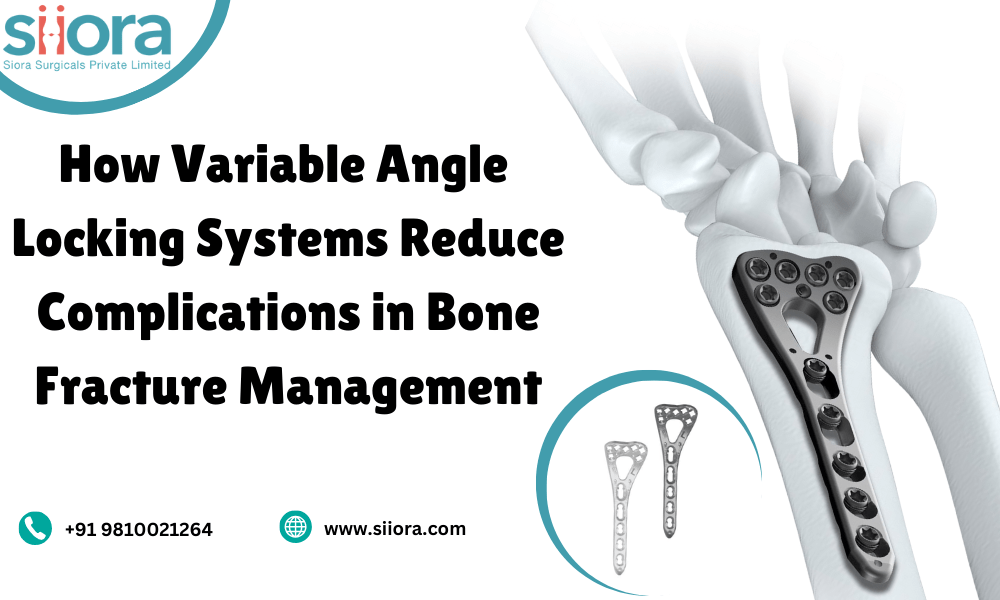
Bone fractures can range from simple, minor breaks to complex, multi-part fractures that pose significant challenges for treatment and recovery. Traditional fixation systems, while effective, often come with complications such as malalignment, hardware failure, or improper healing. However, advancements in orthopedic surgery, particularly with the introduction of variable angle locking plate systems, have revolutionized fracture management, reducing the likelihood of complications and improving patient outcomes.
What Is a Variable Angle Locking System?
Variable angle locking systems are an innovation in orthopedic fracture fixation, providing a more adaptable solution compared to traditional fixed-angle plating systems. These systems are designed to allow the surgeon to alter the angle at which screws lock into the plate. Unlike conventional locking plates, where the screws are fixed at a predetermined angle, a variable angle locking system provides flexibility, enabling screws to be inserted at varying angles based on the unique characteristics of the fracture.
This flexibility is essential for achieving optimal fixation and stability, especially in complex fractures or fractures occurring in areas with irregular bone shapes, such as the pelvis, humerus, or distal femur. Variable angle plates are typically composed of a plate with holes that accommodate locking screws, which can be adjusted to different angles depending on the anatomical requirements of the fracture site.
Reducing Complications with Variable Angle Locking Systems
Improved Fracture Alignment
One of the primary concerns when managing fractures is ensuring that the bone fragments are properly aligned during the healing process. In traditional systems, achieving correct alignment can be difficult, especially in complex fractures where bone fragments may be displaced or rotated. Fixed-angle plates can limit the surgeon’s ability to realign bones effectively.
Variable locking plate systems address this issue by allowing the surgeon to adjust the angle of the screws, enabling more precise reduction and fixation of the fracture. This enhanced flexibility ensures that the bone fragments are properly aligned, reducing the risk of malunion, a condition where the bone heals incorrectly. Proper alignment of bones is crucial for restoring normal function and avoiding long-term disability.
Reduced Risk of Implant Failure
One of the most significant concerns in fracture management is implant failure, particularly in weight-bearing bones. In traditional plating systems, the fixed angle of screws may not always provide optimal support in certain anatomical regions, leading to stress concentration at specific points and an increased risk of screw loosening or breakage.
Variable angle locking systems mitigate this risk by distributing the mechanical load more evenly across the bone, especially in areas of high stress. The ability to adjust screw angles ensures that the implant fits more precisely to the bone, reducing the likelihood of failure due to poor fixation. This is particularly important in fractures of the distal femur or tibia, where the forces exerted during movement can lead to complications in traditional fixation systems.
Enhanced Bone Healing
Proper fixation not only ensures stability but also plays a key role in the healing process. When a fracture is properly aligned and supported, the body can begin its natural healing process with reduced interference from mechanical factors. In contrast, poor alignment or inadequate fixation can lead to nonunion, delayed healing, or malunion.
Variable angle plates provide superior support for bone healing by offering a more stable and customized fixation. The ability to adjust the screws’ angle based on the individual anatomy of the fracture site ensures that the bone fragments are held securely in place. This enhanced stability promotes faster healing times, reducing the risk of delayed union and nonunion.
Versatility in Complex Fractures
Complex fractures, such as those involving comminuted (shattered) bones or fractures near joints, pose unique challenges in fracture management. Traditional plates may not always accommodate these complex scenarios, leading to suboptimal results. The variable angle locking system’s versatility makes it ideal for managing such fractures. It allows the surgeon to customize the angle of each screw for better fixation, even in challenging anatomical locations, thus reducing complications and ensuring the bones heal in the proper position.
Minimized Soft Tissue Damage
When placing traditional fixed-angle plates, surgeons may need to manipulate soft tissues significantly to access the bone, leading to potential damage to muscles, tendons, and ligaments. Locking variable angle plates, with their more adaptable design, allows for a less invasive approach. Surgeons can adjust screw placement more easily without requiring extensive soft tissue manipulation, which helps preserve the surrounding structures and reduces postoperative complications, such as infection or delayed healing.
Conclusion
Variable angle locking systems represent a significant advancement in bone fracture management, offering a solution that reduces many of the complications associated with traditional fixation methods. From improving fracture alignment and reducing the risk of implant failure to enhancing bone healing and minimizing soft tissue damage, these systems provide orthopedic surgeons with a versatile tool to achieve better outcomes for patients. As surgical techniques continue to evolve, the adoption of variable locking plates is likely to become more widespread, further improving the effectiveness and safety of fracture management.If you are looking to be a distributor of orthopedic implants in Argentina, contact Siora Surgicals Pvt. Ltd., a renowned orthopedic manufacturer in India.
 Orthopedic Implants manufacturer